



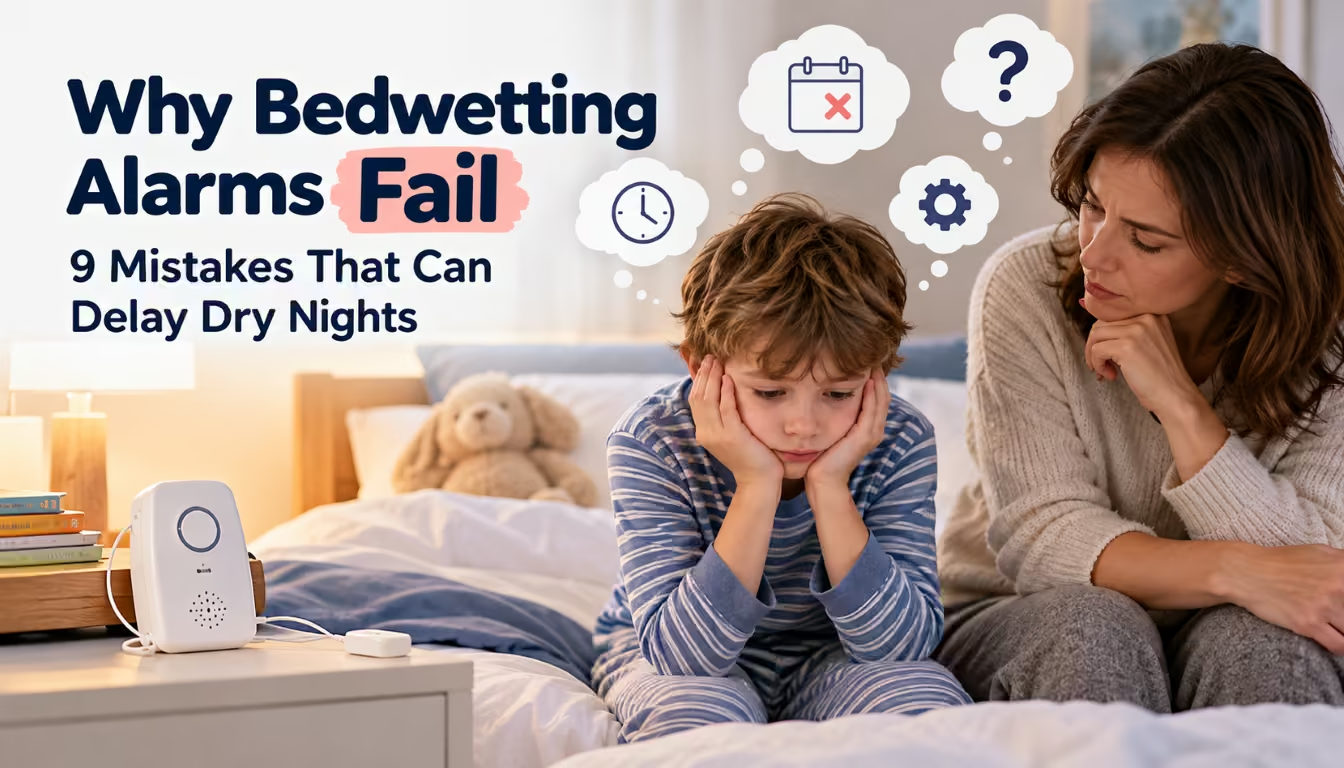
Why Bedwetting Alarms Fail: 9 Mistakes That Can Delay Dry Nights
Overview
Bedwetting alarms are one of the most commonly recommended tools for helping children develop nighttime bladder awareness, but success depends heavily on how the alarm is selected and used. Families sometimes assume that an alarm has failed when the real problem is inconsistent use, incorrect sensor placement, an alarm that does not match the child’s sleep pattern, or expectations that results should happen immediately.
This guide explains nine common reasons bedwetting alarms fail or appear not to work, how parents can correct those problems, and when it may make sense to change the way the alarm is being used.
Introduction
A bedwetting alarm is designed to detect the first signs of moisture and alert the sleeper with sound, vibration, light, or a combination of alerts. Over repeated nights, the goal is to help the sleeper begin responding to bladder signals earlier.
However, buying an alarm is only the beginning of the process.
The type of alarm, moisture sensor placement, alert strength, comfort, parental involvement, and consistency can all influence how well alarm training progresses. Even a well-designed alarm may produce disappointing results if it is used only occasionally or if the sleeper repeatedly sleeps through the alert without assistance.
Families comparing different bedwetting alarms should therefore consider not only product features but also how the alarm will fit into the child’s nightly routine.
This article explains the most common problems and how to address them.
Table of Contents
- Expecting Results Too Quickly
- Using the Alarm Inconsistently
- Choosing the Wrong Type of Bedwetting Alarm
- Using an Alarm That Is Not Strong Enough for a Deep Sleeper
- Positioning the Moisture Sensor Incorrectly
- Ignoring Comfort and Wearability
- Allowing the Child to Sleep Through the Alarm
- Resetting the Alarm Without Completing the Routine
- Giving Up Just as Progress Begins
- How to Improve Bedwetting Alarm Success
- When to Consider a Different Alarm
- Frequently Asked Questions
- Final Thoughts
1. Expecting Results Too Quickly
One of the most common reasons families believe a bedwetting alarm is not working is that they expect dry nights almost immediately.
Bedwetting alarm training is generally a learning process rather than an overnight solution. At first, the child may continue wetting the bed and may not wake independently when the alarm activates.
Early progress can be subtle.
For example, a child may begin waking sooner after the alarm sounds, produce smaller wet patches, or start waking before completely emptying the bladder. These changes may occur before consistently dry nights begin.
Parents should therefore evaluate progress over time rather than deciding whether an alarm works after only a few nights.
2. Using the Alarm Inconsistently
Bedwetting alarms depend on repetition.
Using an alarm for several nights, stopping for a few nights, and then restarting can make it more difficult to establish a consistent nighttime response.
The alarm should generally become part of the bedtime routine.
That means:
- Setting it up correctly every night
- Checking the moisture sensor before sleep
- Responding whenever the alarm activates
- Resetting it correctly afterward
- Continuing the routine even when progress seems slow
Consistency is often more important than adding additional features or constantly switching products.
3. Choosing the Wrong Type of Bedwetting Alarm
Bedwetting alarms generally fall into two major categories: wearable alarms and bedside alarms.
Wearable alarms use a moisture sensor placed close to the point where wetting begins. Bedside alarms use a moisture-sensitive mat placed on the bed.
Neither design is automatically right for every sleeper.
Wearable alarms may be useful for children who want rapid moisture detection and a compact system. Bedside alarms can be a better fit for teenagers, adults, or users who prefer not to attach a sensor to their clothing.
Before choosing a model, families can compare bedwetting alarm designs and consider the sleeper’s age, comfort, sleep depth, and nighttime movement.
4. Using an Alarm That Is Not Strong Enough for a Deep Sleeper
Some children wake easily from a moderate alarm.
Others sleep through loud noises.
For a deep sleeper, alert design becomes especially important. Multiple tones, strong vibration, and visual alerts can provide more stimulation than a basic single-tone alarm.
The Chummie Premium bedwetting alarm combines sound, vibration, and light alerts, giving families several ways to help wake a deeper sleeper.
Even with stronger alerts, parental assistance may be required during the early stages of alarm training.
The goal is not simply for the alarm to make noise. The goal is for the sleeper to eventually begin responding to the bladder signal associated with the alarm.
5. Positioning the Moisture Sensor Incorrectly
A bedwetting alarm cannot respond until its sensor detects moisture.
Incorrect sensor placement can therefore delay activation.
With a wearable alarm, the sensor should be positioned according to the manufacturer’s instructions, usually in an area likely to detect the first drops of urine.
If the sensor is attached too far away from the expected moisture point, the alarm may activate later than intended.
Bedside systems also require correct placement of the sensing mat.
Before bedtime, parents should verify that:
- The sensor is securely attached
- The cable is connected correctly
- The sensor is positioned where moisture is likely to appear first
- The alarm activates correctly during a brief test
6. Ignoring Comfort and Wearability
An alarm that is uncomfortable may be difficult to use consistently.
This matters because bedwetting alarm training usually requires repeated use over many nights.
Families should consider:
- Sensor size
- How securely the sensor attaches
- Wire placement
- Alarm-unit size
- Whether the sleeper moves frequently
- How easily the alarm can be reset
If a wearable system repeatedly bothers the sleeper, a bedside design may be worth considering.
Comfort is not simply a cosmetic feature. It can directly affect whether the system is used every night.
7. Allowing the Child to Sleep Through the Alarm
A common misconception is that if the alarm sounds, the child will automatically wake.
That does not always happen, particularly with deep sleepers.
During the early stages of training, parents may need to wake the child when the alarm activates.
The child should become involved in the complete response:
- Wake up
- Turn off the alarm
- Go to the bathroom
- Finish urinating
- Change wet clothing if necessary
- Reset the alarm
- Return to bed
If parents simply turn the alarm off while the child continues sleeping, an important part of the learning process is lost.
8. Resetting the Alarm Without Completing the Routine
Another common mistake is treating the alarm as something that simply needs to be silenced.
The alarm event should become part of a repeatable nighttime routine.
When the alarm activates, the sleeper should ideally wake, use the bathroom, change if needed, and then reset the system before returning to sleep.
This creates a clearer connection between the moisture event, waking, and toileting.
The goal is not simply to stop the sound.
It is to reinforce the correct nighttime response.
9. Giving Up Just as Progress Begins
Alarm training does not always improve in a straight line.
A child may have several dry nights followed by another wet night. That does not necessarily mean the treatment has stopped working.
Progress may include:
- Smaller wet spots
- Fewer wet nights each week
- Waking sooner after the alarm
- Waking before urination begins
- Going to the bathroom independently
- Longer periods of nighttime dryness
Families sometimes stop using the alarm because progress seems inconsistent when, in fact, these changes may indicate that learning is taking place.
How to Improve Bedwetting Alarm Success
A few practical habits can make alarm training easier.
Use the Alarm Every Night
Consistency gives the sleeper repeated opportunities to respond to bladder signals.
Test the Alarm Before Bed
A quick sensor test confirms that the system is connected and operating correctly.
Make the Child Part of the Process
Whenever appropriate for their age, children should help set up, reset, and maintain the alarm.
Keep Nighttime Responses Calm
Bedwetting should not be treated as misbehavior.
A calm routine helps keep attention on learning rather than embarrassment.
Track Progress Over Time
Families can record wet nights, dry nights, alarm activations, and whether the child woke independently.
This makes gradual improvement easier to recognize.
Families still deciding between alarm types can review the complete range of Chummie bedwetting alarms before selecting a system.
When Should You Consider a Different Bedwetting Alarm?
Changing alarms may make sense when the current system consistently creates a practical problem.
Examples include:
- The child repeatedly sleeps through the available alerts
- The wearable sensor is uncomfortable
- The sleeper strongly dislikes wearing a sensor
- The alarm is difficult to reset
- The sensor frequently becomes detached
- The system is unreliable or damaged
- The sleeper’s needs have changed with age
Before replacing an alarm, make sure the problem is actually the product rather than inconsistent use or incorrect setup.
Families who want to examine a wider range of products can use bedwetting alarm reviews to understand how different designs and features compare.
For broader information about treatment approaches and nighttime routines, additional bedwetting treatment and guidance can also help families understand where alarm training fits into the overall process.
Frequently Asked Questions
Why is my child not waking up to a bedwetting alarm?
Deep sleepers may initially sleep through the alarm. Parents often need to help wake the child during the first stages of treatment. Stronger alerts, multiple tones, vibration, and consistent nighttime response can also help.
How long should a bedwetting alarm take to work?
There is no single timeline that applies to every child. Alarm training usually requires consistent use over an extended period, and improvement may appear gradually before completely dry nights occur.
Can a bedwetting alarm stop working?
Yes. Sensors, wires, connectors, or alarm units can become damaged or worn. If the system behaves inconsistently, test the alarm and inspect the sensor and connections.
Is a louder bedwetting alarm always better?
No. Alarm strength is important for deep sleepers, but moisture detection, vibration, comfort, reliability, and consistent use also matter.
Is a wearable alarm better than a bedside alarm?
Not necessarily. Wearable alarms offer close moisture detection, while bedside systems eliminate the need to attach a sensor to clothing. The better choice depends on the sleeper.
Should parents wake a child when the alarm sounds?
During the early stages, many children—especially deep sleepers—need parental assistance. The goal is for the child to gradually become more responsive and independent.
What if the alarm has been used consistently but there is no improvement?
Review sensor placement, alarm response, comfort, and whether the child is actually waking and completing the nighttime routine. Persistent bedwetting or unusual symptoms should also be discussed with an appropriate healthcare professional.
Final Thoughts
A bedwetting alarm may appear to fail for reasons that have little to do with the alarm itself.
Inconsistent use, unrealistic expectations, incorrect sensor placement, insufficient alerts for a deep sleeper, poor comfort, and incomplete nighttime routines can all interfere with progress.
The most important factors are usually straightforward: choose an alarm that fits the sleeper, use it consistently, respond properly when it activates, and give the learning process enough time.
Families looking for a starting point can explore Chummie’s complete range of bedwetting alarms or learn more about the Chummie bedwetting alarm approach to nighttime alarm training.
Related Articles
How to Choose the Best Bedwetting Alarm for Your Child: The Complete Parent’s Guide
No Comments
Sorry, the comment form is closed at this time.